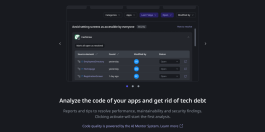
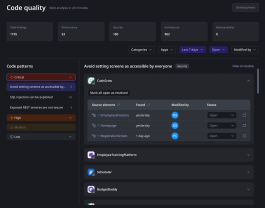
Code Quality is an enterprise-grade technical debt management tool, part of an AI code analysis suite of products. Designed to ensure the highest standards of development while accelerating developer velocity.

User Experience Lead
Led the AI Experience team at OutSystems through the complex, high-stakes migration of a legacy tool into a fully integrated, new-architecture product portal. Reporting to UX management, I led a multidisciplinary design team from concept to release.
My primary role was strategic cross-functional orchestration. I acted as the design counterpart to the Product Manager, Lead Architect, and Engineering Manager, with the objective of mitigating transition risk and ensuring zero disruption to critical developer work.

Mitigating transition risk & adoption drop-off
Originally a legacy tool with a 70% adoption rate within our developer base (driving 4,000+ daily code changes), our challenge was to port this success to a new platform and architecture.
We pushed forward deep strategic research with power users to map existing mental models to the new architectural constraints, reconciling two entirely different design systems without alienating a highly demanding user base.
Go-to-market brand positioning
Stakeholders were fond of the existing tool’s name: AI Mentor System. However, we needed a scalable naming taxonomy that appealed to new market segments and was intuitive by itself.
Navigating complex stakeholder alignment, we bridged the gap between product marketing and user expectations, balancing the specific tool - Code Quality - with the broader, evolving, AI suite.
Information density & cognitive load
Moving from a standalone tool to an integrated portal meant working within strict new rules and constraints. We couldn't reuse any of the original components as we were dealing with a different design system.
We had to pivot the product strategy from simply porting features to actively reducing cognitive load and time-to-resolution, rebuilding the experience from the ground up to present massive amounts of technical data cleanly.

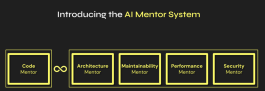
The different pillars support the whole suite of AI products. The team worked on all of them separately.

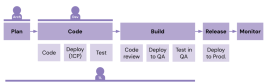
The different stages in which we expected users to operate Code Quality on. Work done with UX strategic research.
For Code Quality, we didn’t limit ourselves to feature parity. We leveraged usage data and vocal users to champion a new asynchronous collaboration engine.
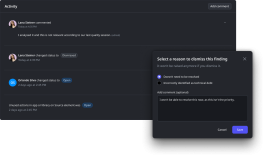
One of the key strategic additions was an activity log with a contextual commentary mechanism. This improved developer velocity by shifting technical debt resolution from a siloed task to a collaborative, transparent workflow.
This included a tagging system to guarantee key changes stand out, and the capability to add contextual reasoning to address technical debt. It was a direct response to the business need for teams to track accountability and asynchronous collaboration efficiently.

The new activity log on the left with a few comments from a team working on technical debt and a pop-up to select a reason and comment after dismissing a technical debt finding on the right.