This specific content design workshop was an enterprise-wide Design Ops initiative aimed at scaling content design maturity and establishing scalable standards across a high-growth organization.

Content Design Lead
Reporting to the Head of UX, my focus was on content design operations and practice evangelism, acting as a central unit lead.
I owned and promoted the "thinking like a content designer" module, shifting the company's design culture to prioritize information architecture and intent before a single UI component was drawn.

Scaling through self-serve enablement
Organizational demand for content design went far beyond our dedicated capacity. Our challenge was to empower the 70+ UX practitioners without dedicated support to navigate common content hurdles autonomously.
We gave visibility to systemic assets like the product style guide, eliminating operational bottlenecks so the core Content Design team could focus on high-ambiguity, strategic work.
Process transparency and shifting left
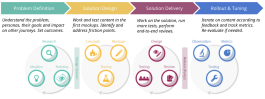
We needed to demystify the content workflow, proving that the real work happens in the discovery and diagramming phases, not just in the final UI copy.
We provided actionable frameworks for UXers to prove the business impact of their content decisions, linking semantic clarity directly to conversion and user error reduction.
Creating cross-functional alignment
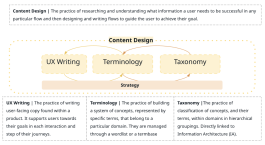
We aimed to clarify how all UX roles intersect with terminology frameworks and pattern guidelines. This required bridging the gap between Product Design, Technical Writing, and Engineering to ensure a unified content voice.

Planned initially as a one-time presentation for UX designers, we scaled the initiative into a year-long roadshow. We successfully enabled over 70 UX practitioners, our technical writing colleagues, and core developers.
Measuring ROI on Design System Adoption
Enabling other roles fundamentally reduced our organizational design debt. In the 6 months following our initial rollout, we achieved a 300% growth in weekly page views in our product style guide.
This surge in self-serve velocity drastically reduced cross-team support cycles and successfully secured executive buy-in to expand AI-assisted writing tool licenses for the entire UX group.
Iterative Governance
Treating our internal team as the user, we collected feedback after every session. Based on this data, we continuously refined our content diagramming processes and established stricter UI component guidelines, creating more plug-and-play patterns for the whole R&D.


This specific content design workshop was an enterprise-wide Design Ops initiative aimed at scaling content design maturity and establishing scalable standards across a high-growth organization.

Content Design Lead
Reporting to the Head of UX, my focus was on content design operations and practice evangelism, acting as a central unit lead.
I owned and promoted the "thinking like a content designer" module, shifting the company's design culture to prioritize information architecture and intent before a single UI component was drawn.

Scaling through self-serve enablement
Organizational demand for content design went far beyond our dedicated capacity. Our challenge was to empower the 70+ UX practitioners without dedicated support to navigate common content hurdles autonomously.
We gave visibility to systemic assets like the product style guide, eliminating operational bottlenecks so the core Content Design team could focus on high-ambiguity, strategic work.
Process transparency and shifting left
We needed to demystify the content workflow, proving that the real work happens in the discovery and diagramming phases, not just in the final UI copy.
We provided actionable frameworks for UXers to prove the business impact of their content decisions, linking semantic clarity directly to conversion and user error reduction.
Creating cross-functional alignment
We aimed to clarify how all UX roles intersect with terminology frameworks and pattern guidelines. This required bridging the gap between Product Design, Technical Writing, and Engineering to ensure a unified content voice.
Homework, before changing a single word
Writing for a better experience